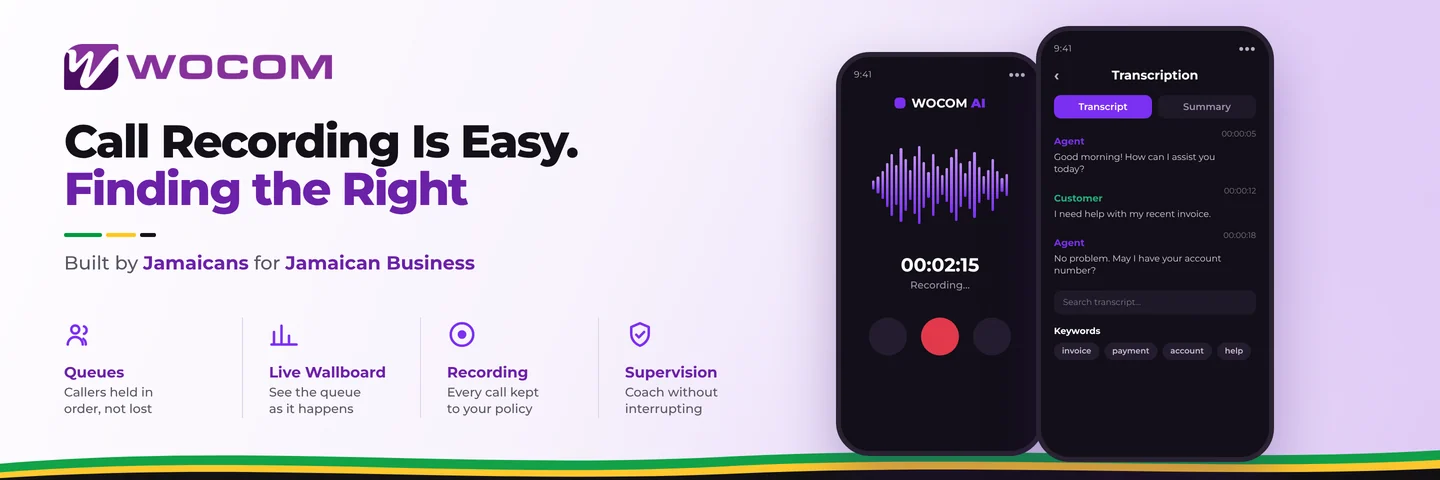
Call Recording Is Easy. Finding the Right Recording Is the Hard Part
Switching on call recording takes a moment. Six months later, when a customer disputes what was agreed, the business discovers the actual problem: it has thousands of recordings, no way to find the right one, and no idea whether it is still there.
Recording is the easy half. Storage, search and retention are the half that determines whether any of it was worth doing.
Where the recordings live
Server-side, not on handsets or individual machines. That sounds obvious and is regularly got wrong, usually where recording was set up on a PBX with local storage and a disk that quietly filled up two years ago.
Central storage gives you three things a local disk does not: recordings that survive the person who made them, access for whoever legitimately needs one, and a retention rule that applies to everything rather than to whatever somebody remembered to delete.
Finding one in under a minute
Search is what makes an archive usable, and it works in layers:
- Metadata — date, time, extension, caller number, duration. This alone answers most retrieval requests, provided you know roughly when.
- Transcript search — the words spoken. This is what answers “find the call where we agreed the March delivery” when nobody remembers the date. It is the difference between an afternoon and thirty seconds, and it is covered in the transcription guide.
- Flagging at the time — letting an agent mark a call as significant while it is happening. Cheap, and it front-loads the work onto the one person who knows the call mattered.
How long to keep them
Longer is not safer. Every recording you hold is personal data you are responsible for, and Jamaica's Data Protection Act expects a defined retention period rather than an indefinite archive — the obligations are set out in the compliance guide.
Set the window against the purpose. Dispute resolution rarely needs more than a few months. Sectors with their own rules — financial services in particular — may need considerably longer, and those rules override the general principle.
Whatever you choose, automatic deletion is the only version that survives contact with a busy year.
Who should be able to listen
Fewer people than have access in most businesses. A recording of a customer call is a record of a private conversation, and access should follow a reason rather than a job title. Where the platform supports it, log who retrieved what — not out of suspicion, but because being able to answer “who listened to this” is part of taking the data seriously.
Storage cost is not the constraint people expect
Audio is small. A one-hour call at typical quality is a few tens of megabytes, so a busy small business generates less data in a year than a phone's photo library. Cost is rarely the reason to shorten retention; risk is.
Frequently Asked Questions
How long should we keep call recordings?
Long enough for the purpose you wrote down, and no longer. A few months covers most dispute resolution; regulated sectors may require more.
Can I search recordings by what was said?
With transcription, yes — that is what turns an archive into something usable. Without it you are searching by date and extension only.
Where should recordings be stored?
Centrally on the provider's platform, not on individual machines or handsets, so they outlast the person who made the call.
Who should be allowed to listen to recordings?
People with a specific reason, rather than everybody with a login. Retrieval logging is worth having where it is available.
Getting started
Try retrieving one call from three months ago. If it takes more than a minute, the archive is not doing its job. The Contact Center page covers recording and retrieval, and pricing covers what is included.
Continue exploring
Ready to upgrade your communications?
Talk to our team about the right solution for your business.
Book a Demo Contact SalesEverett Kildare is WOCOM's voice and infrastructure specialist, with more than 25 years of experience designing and running carrier-grade voice, SIP and virtualization infrastructure. Holding a BSc in Information Technology, he has built, secured and migrated phone systems for businesses of every size. Everett writes WOCOM's technical coverage of SIP trunking, cloud PBX, contact centres, business continuity and migration.