Jamaica's Data Protection Act and Call Recording: What to Settle Before You Press Record
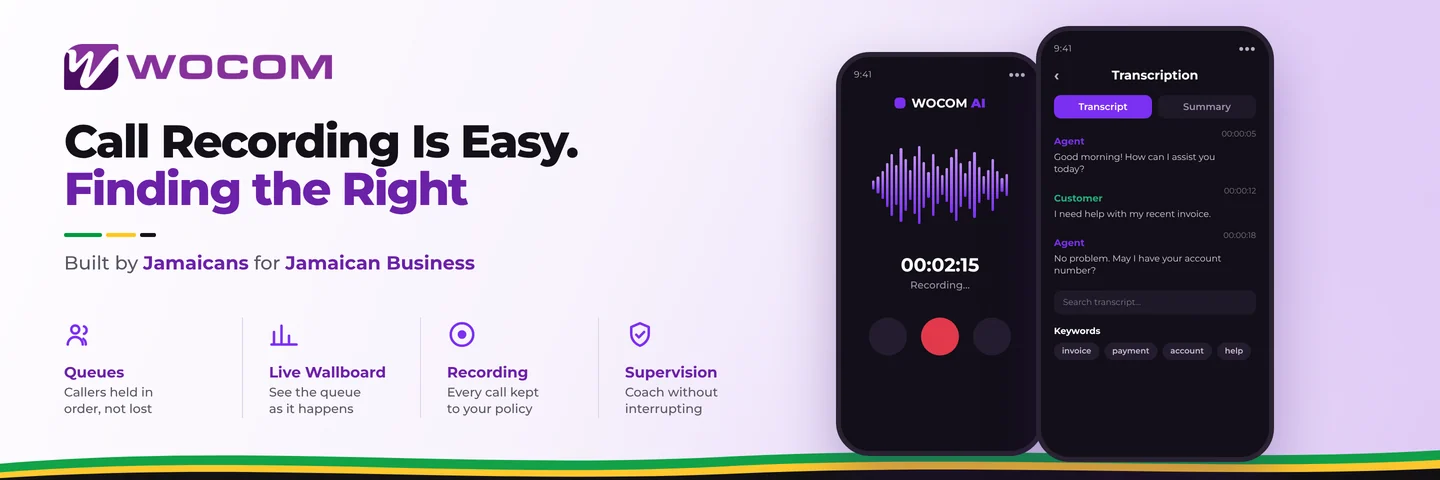
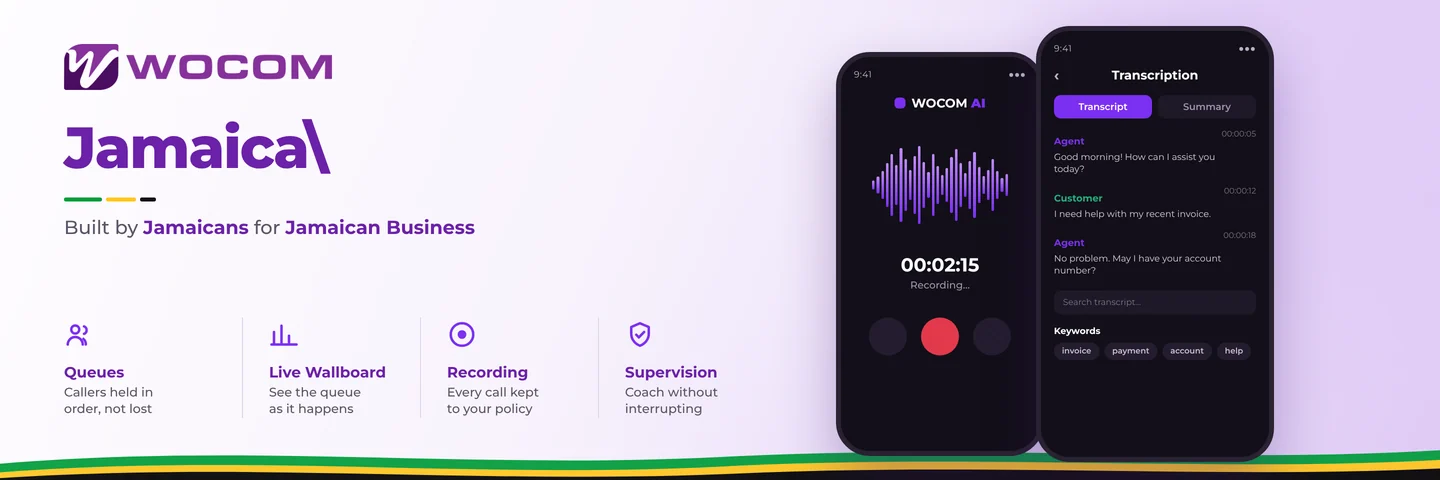
Call recording is one of the easiest features to enable on a modern phone system. It is a toggle. What sits behind that toggle — a growing archive of conversations in which customers give their names, account numbers, addresses, medical details and financial circumstances — is personal data, and Jamaica’s Data Protection Act treats it accordingly.
This is a practical guide for business owners and managers, not a legal opinion. Where your obligations are significant — regulated financial services, healthcare, anything involving children’s data — take proper advice and consult the Office of the Information Commissioner directly. What follows is the shape of the thing, so you know which questions to ask.
Yes, a Recording Is Personal Data
Any information relating to an identifiable living individual counts. A recorded call almost always qualifies: the caller identifies themselves, or the number identifies them, or the content does. So do the artefacts that come after the recording — transcripts, AI summaries, sentiment scores, and notes written into a CRM.
This surprises people. A business may have carefully considered its customer database and never once thought of the call archive as the same kind of asset carrying the same kind of duty. It is, and in some ways it is more sensitive, because callers say things aloud they would never type into a form.
The Six Things to Get Right
1. Tell people, before the recording starts
Callers must know a recording is being made and why. In practice this is an announcement at the very start of the call, before any substantive conversation:
“This call may be recorded for training and quality purposes.”
Two refinements are worth making. Say why — “training and quality” is fine if that is the truth, but if you also use recordings to verify orders or resolve disputes, say so. And make sure the announcement plays on outbound calls too. Businesses reliably configure this on the inbound path and forget the outbound one entirely.
2. Have a reason, and stick to it
Personal data must be collected for a specified, lawful purpose and not used for something unrelated later. If you recorded calls for quality assurance, you cannot repurpose the archive as raw material for a marketing exercise without revisiting the basis on which it was collected.
Write the purpose down. One paragraph in a policy document is enough, and it is the first thing anyone will ask to see.
3. Do not keep them forever
Data should be kept no longer than necessary for the purpose. “Necessary” is defined by your reason for holding it, not by how much storage you have.
Sensible practice for most Jamaican businesses:
- Quality and training — a short window, typically 30 to 90 days
- Dispute resolution and order verification — as long as the transaction can reasonably be disputed
- Regulatory requirements — whatever your regulator specifies, which overrides the above
Then automate the deletion. A retention policy that depends on somebody remembering to clear an archive is not a retention policy. Set it in the platform and let it run.
4. Restrict who can listen
Not every employee needs access to recorded calls. Supervisors reviewing their own team, yes. The whole company, no. Access should be role-based and logged, so it is possible to answer who listened to what.
This is where phone system administration meets access control generally, and where the questions in privileged access security become relevant — an administrator with unlogged access to the recording archive is a gap in the same policy you just wrote.
5. Be ready for someone to ask for their data
Individuals have rights over their own personal data, including the right to request access to it. If a customer asks for the recording of their own call, you need to be able to find it, and to provide it without exposing other people’s data in the process.
Practically, that means recordings must be searchable by number and date. An archive you cannot search is one you cannot answer a request from.
6. Know where the data lives and who processes it
If recordings are stored by a provider, or transcribed by a third-party service, those parties are processing personal data on your behalf. You should know who they are, what they do with it, and have that written into your agreement with them. When AI transcription or sentiment analysis is involved, the same question applies to the AI provider.
Where AI Adds a Wrinkle
AI-generated transcripts and summaries make call archives dramatically more useful — and dramatically more searchable. That is the point of them. It also means a call that was previously buried in an audio file nobody would ever listen to becomes text that can be queried in seconds.
The obligations do not change, but the practical consequences of getting them wrong grow. Two additions to your policy are worth making: state that automated transcription and analysis are applied, and apply the same retention rules to the transcripts as to the audio. Deleting a recording while keeping its full transcript indefinitely defeats the purpose of the deletion.
Sectors Where This Is Not Optional
Some Jamaican businesses face this more sharply than others:
- Credit unions and financial institutions, where recording is often a supervisory expectation and the content is inherently sensitive — see call recording compliance for financial institutions
- Healthcare providers, where calls routinely contain health information
- Law firms, where recordings may touch privileged material
- Public bodies, which are subject to the Act and to public scrutiny
- Contact centres and BPOs, which may also be bound by the requirements of overseas clients
A Short Checklist
- Is there a recording announcement, on inbound and outbound calls?
- Is the purpose written down?
- Is there a retention period, and is deletion automatic?
- Is access role-based and logged?
- Can you find and produce a specific call on request?
- Do you know every third party that touches the recordings?
- Do transcripts and AI summaries follow the same rules as the audio?
Most businesses can answer the first question and stall on the third. That is the usual gap, and it is fixable in an afternoon.
Getting the Configuration Right
WOCOM Cloud PBX and Contact Center support recording announcements on both call directions, role-based access to recordings, and automatic retention limits — so the policy you write can actually be enforced by the system rather than by memory. If you are recording today and are not sure how your retention is configured, that is worth checking this week.
Call 876-326-1212, message us on WhatsApp, or visit the Contact Center page. For the regulatory position itself, the Office of the Information Commissioner is the authoritative source, and this article is not a substitute for it.
Continue exploring
Ready to upgrade your communications?
Talk to our team about the right solution for your business.
Book a Demo Contact SalesEverett Kildare is WOCOM's voice and infrastructure specialist, with more than 25 years of experience designing and running carrier-grade voice, SIP and virtualization infrastructure. Holding a BSc in Information Technology, he has built, secured and migrated phone systems for businesses of every size. Everett writes WOCOM's technical coverage of SIP trunking, cloud PBX, contact centres, business continuity and migration.