Business Phone Systems for Small Businesses: What Five to Twenty People Actually Need
Small businesses are usually sold one of two wrong things: a consumer line that cannot transfer a call, or an enterprise system specified for a company five times the size. What a five-to-twenty person business actually needs sits between them, and it is mostly about not missing calls.
The small business phone system guide covers the full picture. This is the checklist version.
The five things that matter at this size
- One business number that reaches the business, not one person's desk.
- An extension each, so calls can be transferred instead of taken as a message.
- Answering away from the desk — the same extension on a mobile app.
- Something that answers when nobody can, whether that is a menu, voicemail or an AI receptionist.
- A record of what you missed. At this size nobody notices a lost call until the customer is gone.
What you can safely skip
Queues, wallboards, supervisor tools and detailed agent reporting are contact-centre features. They are worth money when answering calls is somebody's whole job, and they are clutter before that. Skip them until the reporting tells you callers are waiting.
The mistake that costs the most later
Letting the business number be somebody's mobile. It is convenient at four people and painful at twenty, because the customer relationship belongs to the individual rather than the company, and unpicking it means telling customers to use a different number.
Put the number on the business from day one, even if it rings one phone at first.
What it costs
Per user per month, so a five-person business pays for five people rather than for the four lines somebody sized the office for a decade ago. Video conferencing and an AI receptionist allowance are included rather than extra — how to read a quote covers the comparison.
When to change it again
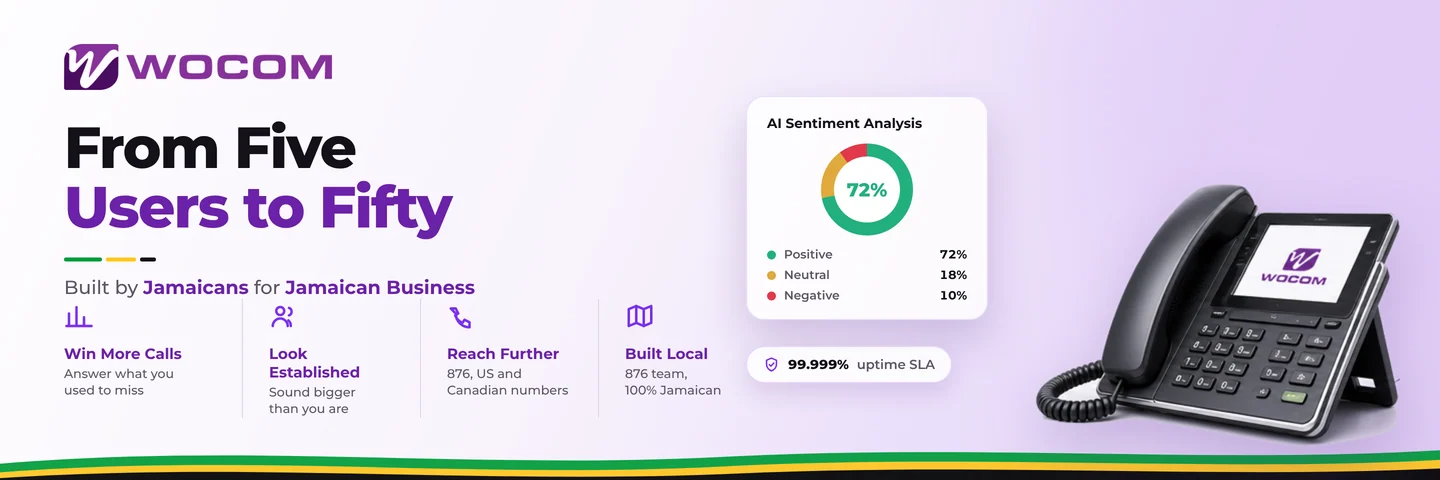
Around ten to fifteen people, when everybody-rings starts producing slower answers rather than faster ones, and departments become worth setting up. From five users to fifty maps what breaks at each stage.
Frequently Asked Questions
What is the smallest business worth putting on a phone system?
Two people. From there, extensions, transfers and a shared business number save real time.
Do I need desk phones?
No. The mobile app or a laptop is enough to start; handsets can come later.
How long does setup take?
Usually the same week. Number porting is the longest step and runs in the background.
Can I keep my current number?
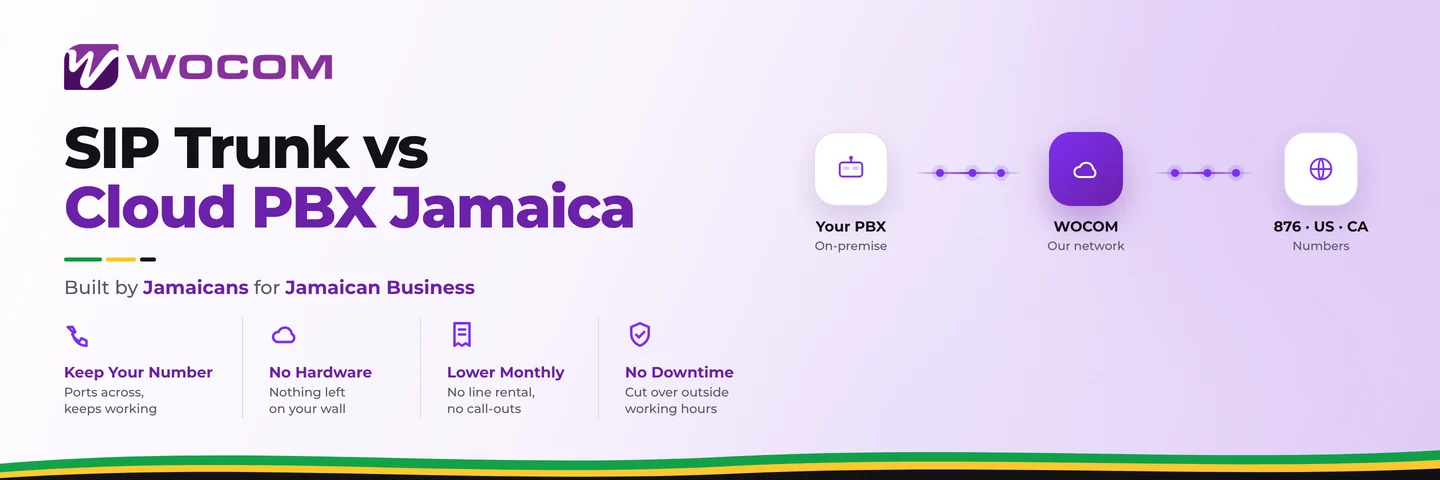
Yes. It ports across and keeps working, so nothing needs reprinting.
Getting started
The Cloud PBX page covers what is included, and the WOCOM team can port an existing 876 number and have a small team running within the week.
Continue exploring
Ready to upgrade your communications?
Talk to our team about the right solution for your business.
Book a Demo Contact SalesMichelle Goss is a data and AI analyst at WOCOM, where she studies how Jamaican businesses use voice, messaging and AI to win and keep customers. With a BSc in Data Science & Analytics, she turns call data, customer trends and AI receptionist performance into practical guidance owners can act on. Michelle writes WOCOM's coverage of AI call handling, call analytics, customer growth and industry trends.