AI Transcription for Phone Calls: Record, Transcribe, Search, Secure
Every business intends to write up its calls. Almost none do it consistently, because the note competes with the next call and loses. AI transcription removes the intention from the process: the call is recorded, converted to text, and made searchable without anybody deciding to do it.
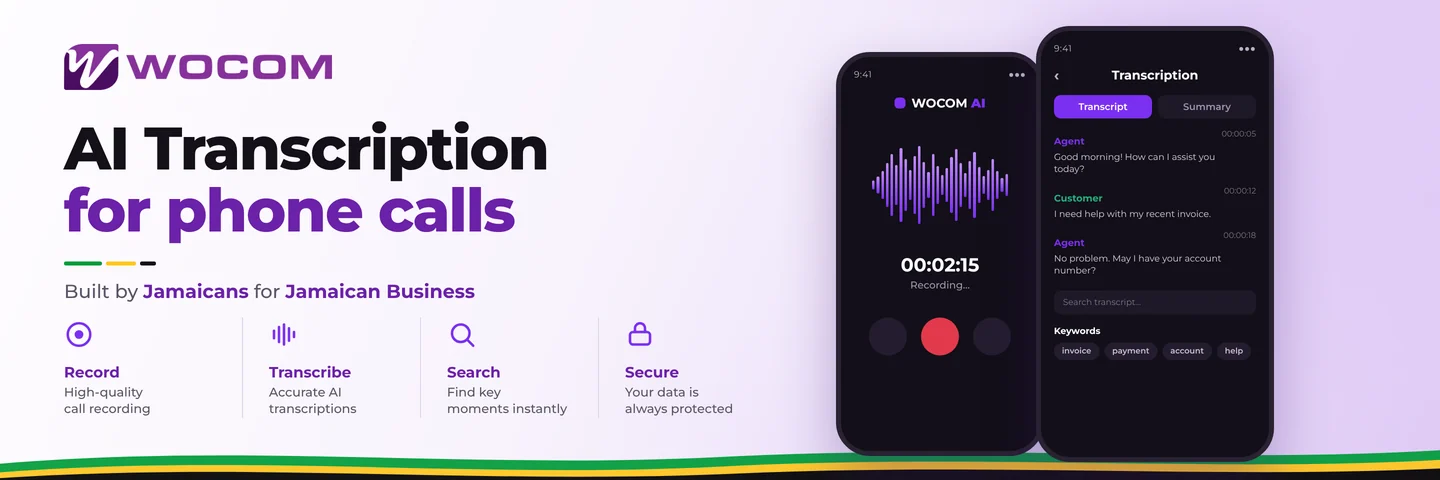
Four things happen to each call — it is recorded, transcribed, indexed for search, and stored under a retention rule. This is what each step is worth, and what it obliges you to do.
Recording: the part that already existed
Call recording is not new, and most businesses that have it barely use it. The reason is practical: recordings are only useful if you can find the right one, and a folder of audio files sorted by date is not findable. Recording is the raw material for everything below rather than the benefit itself.
One decision matters at this stage: recordings should be stored centrally rather than on individual machines. A recording on somebody's laptop leaves the business when they do.
Transcription: turning audio into something you can read
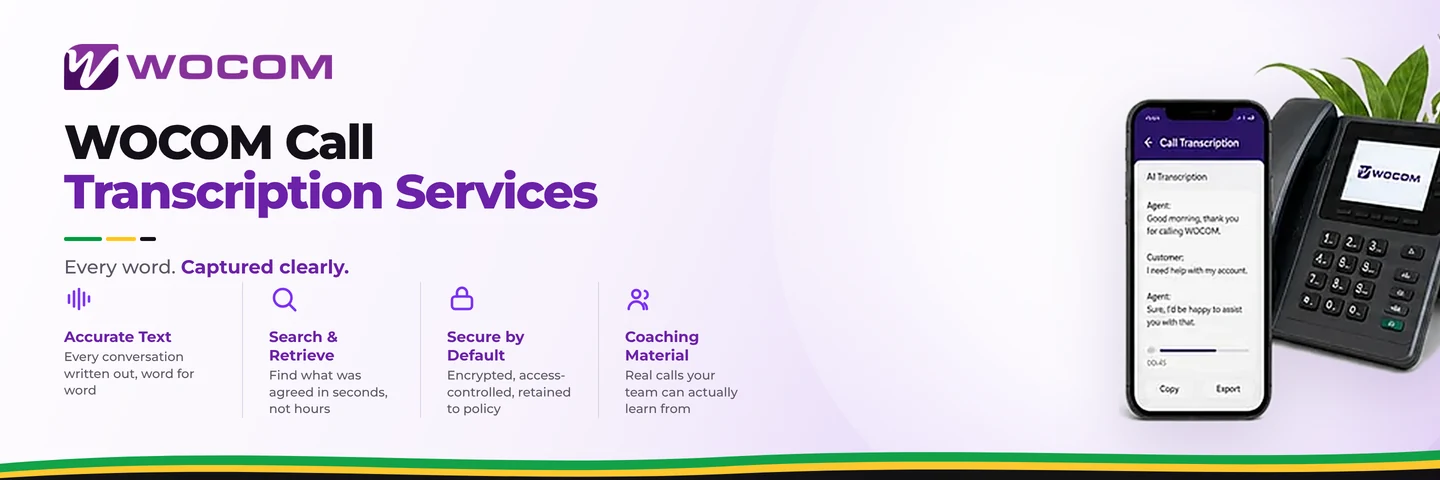
Transcription converts each call into text with the speakers separated and timestamps attached, so a two-minute skim replaces a fifteen-minute listen.
Accuracy on Jamaican speech is good and not perfect. It is strongest on the parts that usually matter — the reason for the call, amounts, dates, commitments — and weakest on unusual proper nouns and heavy background noise. Read it as a reliable record of what was discussed rather than as a legal verbatim.
Search: the reason any of this is worth doing
This is the step that changes the day-to-day. Six weeks after a call, when a customer disputes what was agreed, the question is not “do we have a recording” but “can we find the sentence.” Searching text takes seconds; listening to recordings takes an afternoon.
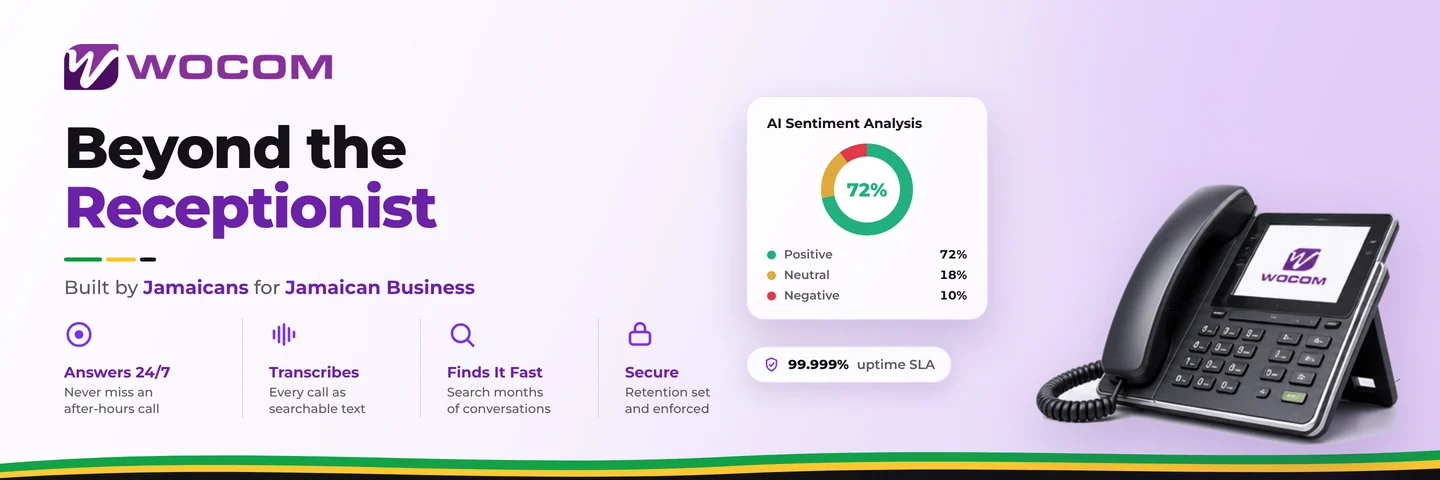
The same search answers questions nobody could previously ask. How often did callers mention a particular product last month. Whether the delivery complaint is a pattern or an incident. Which objection comes up most in sales calls. Sentiment analysis sits alongside this, scoring how conversations went so a supervisor can review the ten that went badly instead of sampling at random.
Secure: retention, and the part that is a legal obligation
A recording of a customer call is personal data. Jamaica's Data Protection Act expects three things: that callers are told, that there is a defined purpose, and that recordings are not kept indefinitely.
In practice that means an announcement at the start of the call, a written note of why you record, and a retention window that deletes automatically rather than when somebody remembers. Automatic deletion is the part worth insisting on — a manual policy is a policy that quietly stops being followed. The call recording compliance guide covers what has to be in place, and the financial-sector guide covers the stricter cases.
Where it earns its place
Three situations, consistently:
- Disputes. What was agreed, by whom, on what date. This alone justifies it for most businesses that quote work over the phone.
- Training. Real calls, with the good and bad examples findable rather than remembered.
- Handover. When someone leaves, the account history is in the system rather than in their memory.
Where it does not
Transcription does not replace a CRM note, because nobody reads a transcript for pleasure — the summary still matters. It also does not make sense to switch on across every call in a business where most calls are internal and routine; the storage and the obligations both grow, and the value does not.
Start with customer-facing lines. Widen it if the searches turn out to be useful.
Frequently Asked Questions
How accurate is transcription on Jamaican accents?
Good on the substance of a call — reasons, amounts, dates, commitments — and less reliable on unusual names and heavy background noise. Treat it as a working record rather than a verbatim transcript.
Do I have to tell callers the call is being transcribed?
Yes. Notice is required under the Data Protection Act, and it is normally handled by an announcement when the call connects.
How long are recordings kept?
For as long as the retention window you set, after which they delete automatically. Choosing a window and letting the system enforce it is the part that keeps you compliant.
Can staff delete their own recordings?
No, and they should not be able to. Recordings belong to the business account rather than to the person who made the call.
Is transcription included or an extra?
WOCOM accounts include an allowance for AI features. The companion guide to AI call transcription covers how businesses are using it day to day.
Getting started
Switch it on for one customer-facing line and search it after two weeks. If the searches answer questions you could not previously answer, widen it. The WOCOM AI page covers transcription, sentiment and the receptionist together.
Continue exploring
Ready to upgrade your communications?
Talk to our team about the right solution for your business.
Book a Demo Contact SalesMichelle Goss is a data and AI analyst at WOCOM, where she studies how Jamaican businesses use voice, messaging and AI to win and keep customers. With a BSc in Data Science & Analytics, she turns call data, customer trends and AI receptionist performance into practical guidance owners can act on. Michelle writes WOCOM's coverage of AI call handling, call analytics, customer growth and industry trends.