Whisper Coaching Jamaica: Fix the Call While the Customer Is Still on the Line
The Hold That Loses the Sale
A customer calls a Kingston distributor asking whether an item is in stock and what the trade price is. The agent is new. She does not know. So she says the words every business says several times a day: "Let me just check that for you — can you hold one moment?"
What happens next is where money leaks. The hold music starts. She mutes, stands up, walks to a supervisor who is on another call, waits, comes back ninety seconds later. Some customers wait. A meaningful share do not — they hang up and call the next supplier, and nobody in the business ever learns that it happened.
Whisper coaching removes that entire sequence. The supervisor, watching the live call on screen, presses Whisper and says four words into the agent's ear: "In stock, forty-two hundred." The customer hears nothing but a small pause. The agent answers. The call takes forty seconds instead of three minutes, and the order is placed.
What Whisper Is — and How It Differs From Listen and Barge In
Live supervision offers three modes, and confusing them is the most common mistake new supervisors make:
- Listen — you hear the call. Neither the agent nor the customer knows you are there. This is observation.
- Whisper — you hear the call and the agent hears you. The customer does not. This is coaching.
- Barge In — everyone hears everyone; it becomes a three-way call. This is intervention.
Whisper is the mode that changes outcomes without changing who owns the call. The agent stays in control, the customer's experience is uninterrupted, and the agent learns something they will still know next week.
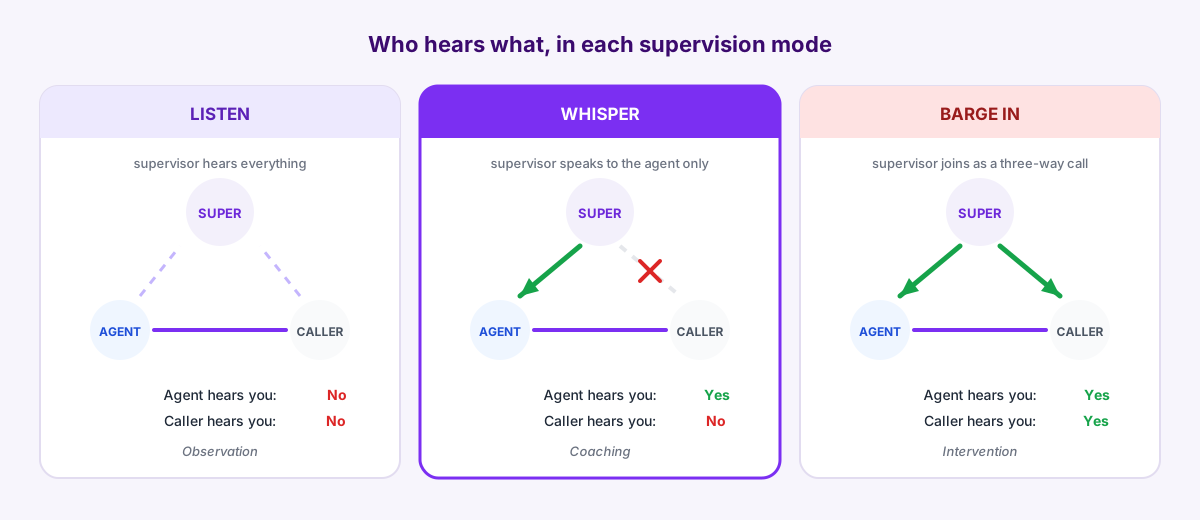
The whole distinction in one picture: Listen is observation, Whisper is coaching the agent alone, Barge In makes it a three-way call.
When Whisper Earns Its Keep
Missing information
Prices, stock levels, lead times, policy limits. Anything the agent would otherwise put the customer on hold to find out.
A new agent in week one
Instead of shadowing a senior agent for two weeks before touching a live call, a new hire can take calls on day two with a supervisor whispering. The learning curve compresses dramatically, because the lesson arrives at the exact moment it is needed.
A call heading toward a complaint
Listening in, you can hear the tone turn. A whispered "offer the credit, don't argue the invoice" often prevents the escalation entirely — which is far better than barging in and confirming to the customer that they were right to be angry.
A sales call at the closing moment
The customer has one objection left and the agent is about to concede on price. A whisper of the approved alternative saves the margin.
Remote and multi-branch teams
Because supervision runs in a browser, a manager in Kingston can whisper to an agent in Montego Bay or Mandeville exactly as easily as to someone across the room. For Jamaican businesses running several locations, this is the feature that makes distributed teams coachable.
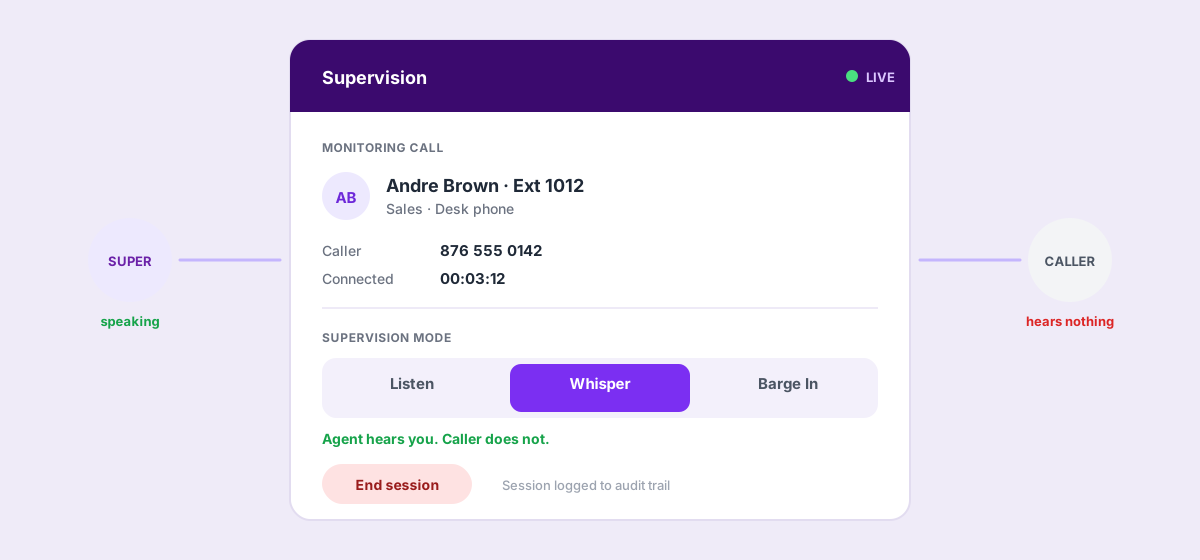
The supervision panel during a whisper: the supervisor is speaking, the agent hears it, and the caller hears nothing but a short pause.
How to Whisper Without Rattling the Agent
Whispering into someone's ear while they are talking to a customer is cognitively demanding for the agent. The technique matters as much as the tool.
- Keep it under five words. "Stock: yes. Price: 4,200." Not a sentence, not an explanation. The agent is listening to two people at once.
- Give the answer, not the instruction. "Tell her it ships Thursday" is easier to relay than "you should probably let her know about the shipping timeline".
- Whisper during the customer's turn. Speak while the caller is talking, not while the agent is. This is the single biggest skill difference between good and bad supervisors.
- Do not correct tone mid-call. "You sound rude" helps nobody in the moment. Note it and cover it afterwards.
- Never whisper twice in a row without pausing. If the agent needs continuous guidance, the call needs Barge In or a transfer.
Tell Your Agents It Exists
This is where Jamaican employers most often get it wrong. Whisper coaching works when agents experience it as support. It corrodes trust when it feels like surveillance that nobody mentioned.
Practical guidance:
- Explain the feature during onboarding, and demonstrate it once so the agent knows what it sounds like.
- Be clear about who can monitor — supervision is limited to nominated supervisor extensions, not every colleague.
- Be clear about scope — monitoring is scoped by department, so a team lead sees their own team.
- Point at the audit trail. Every listen, whisper and barge-in session is logged, which protects the agent as much as the business.
- Use it to help before you ever use it to assess. The first ten whispers an agent receives should all be rescues.
Teams that introduce whisper coaching this way generally end up with agents asking for it — because being stuck on a call with no way to get help is far more stressful than being coached through one.
Whisper vs the Post-Mortem
| Recording review | Whisper coaching | |
|---|---|---|
| When feedback lands | Days later | During the call |
| Effect on this call | None | Often decides the outcome |
| Customer experience | Hold, callback, or lost | Uninterrupted |
| Agent recall | Abstract | Anchored to a real moment |
| Supervisor time | Hours of listening | Seconds per call |
Recording review still has a place — for scoring, for trends, for compliance. But it cannot save a call, and whisper can.
Getting Started
You need three things: a phone system that supports live supervision, at least one nominated supervisor extension, and an agreed rule for when whisper is used. No software is installed on the agent's side and no change is needed to their handset — it works across desk phones, the mobile app and browser extensions.
WOCOM's Live Call Management includes listen, whisper and barge-in on every live call, with department scoping and a full audit trail, on our own licensed Jamaican network. Book a walkthrough and we will show you the whisper flow on a live call.
Continue exploring
Ready to upgrade your communications?
Talk to our team about the right solution for your business.
Book a Demo Contact SalesEverett Kildare is WOCOM's voice and infrastructure specialist, with more than 25 years of experience designing and running carrier-grade voice, SIP and virtualization infrastructure. Holding a BSc in Information Technology, he has built, secured and migrated phone systems for businesses of every size. Everett writes WOCOM's technical coverage of SIP trunking, cloud PBX, contact centres, business continuity and migration.