The Cloud Phone System That Listens: What AI Actually Adds to a Jamaican Business Line
Most AI features sold with phone systems are a worse menu with a friendlier voice. A few are genuinely useful, and they have one thing in common: they do work a person was doing badly because there was never enough time to do it properly.
Three of those are running on Jamaican businesses today — answering out of hours, transcribing calls, and scoring how conversations actually went. This is what each one does, and where the limits are.
First, the part that is not AI
Everything below sits on top of an ordinary cloud phone system: numbers, extensions, routing, handsets, reporting. If that layer is not right, no amount of AI improves it — an AI receptionist in front of a broken routing table just fails more politely. Get the phone system working, then add the parts that listen.
Answering the calls nobody was answering
The clearest win is the call that used to ring out. Evenings, lunch hours, public holidays, and the twenty minutes when everyone is on another line. Those calls were not going to voicemail — most callers hang up rather than leave one.
WOCOM's AI receptionist answers those calls, speaks naturally rather than reading a menu, takes the details, and emails the business a message. It knows business hours, it can pass a caller to a person when one is available, and it does not get tired at eleven at night.
What it is not: a replacement for the team. It handles the first ninety seconds — who is calling, what about, how urgent — and hands over anything that needs judgement. Businesses that try to route everything through it end up with irritated customers.
Transcription: the note-taking nobody was doing
Every business intends to write up calls. Almost none do consistently. Transcription removes the intention from the process: the call is recorded, transcribed, and searchable, with keywords pulled out.
The value is not the transcript, it is the search. Six weeks later, when a customer disputes what was agreed, finding the sentence takes seconds rather than an afternoon of listening. The transcription guide covers accuracy, Jamaican accents and where it still gets things wrong.
Sentiment: which calls went badly, without listening to all of them
Nobody reviews call recordings. There are too many, and the ones worth reviewing are indistinguishable from the rest until you have listened.
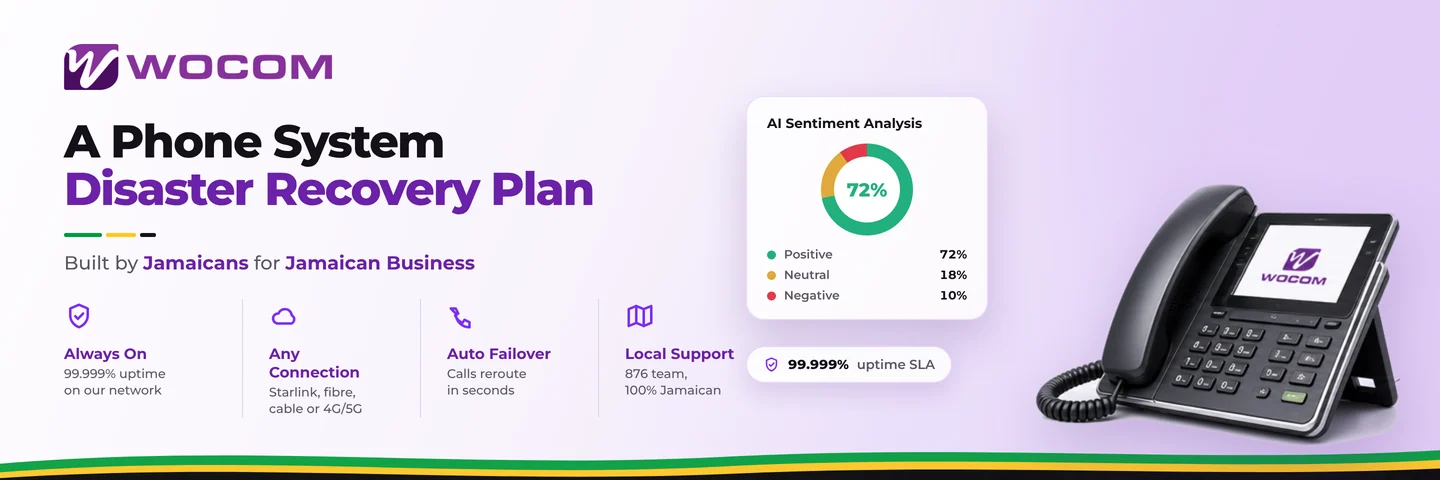
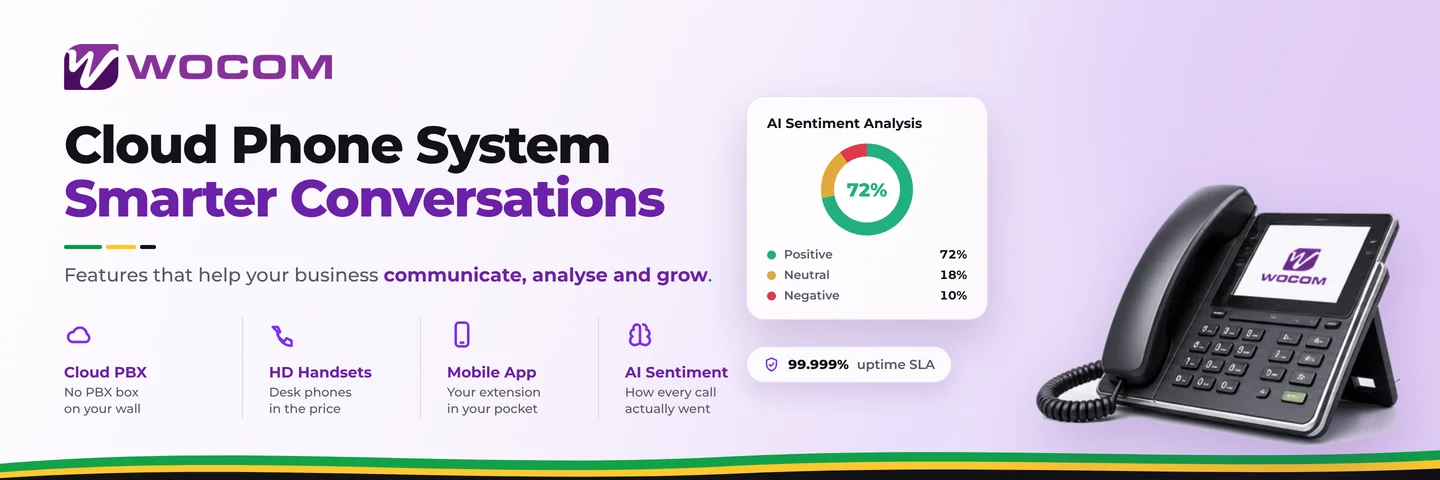
Sentiment analysis scores each call, so a supervisor can open the ten that went badly instead of sampling at random. In practice it is used two ways: spotting an unhappy customer while there is still time to call back, and finding the recurring problem — a product fault, a billing error, a process that generates the same angry call every week. The sentiment analysis guide covers how the scoring behaves on Jamaican speech.
What to leave switched off
Two things are worth resisting.
AI that makes decisions on the call. Quoting prices, agreeing terms, promising delivery dates. The technology can produce a confident sentence about any of these, and a confident wrong sentence about pricing is expensive.
AI in front of your best customers. Route known accounts straight to a person. The efficiency saved is trivial next to the impression that they are not worth a human answering.
The obligations that come with it
Recording and transcribing calls is processing personal data, and Jamaica's Data Protection Act expects notice, a purpose, and a retention limit. That means telling callers, deciding how long recordings are kept, and deleting them on schedule rather than when somebody remembers. The compliance guide covers what has to be in place.
There is a practical failure mode too, unrelated to the law: an AI receptionist depends on a working connection to its provider. A business that routes every out-of-hours call through it should know what happens when that fails — the answer should be a fallback to voicemail or a mobile, not a ringing tone.
What it costs to try
Every WOCOM Cloud PBX account includes an AI receptionist allowance, so the honest way to evaluate it is to switch it on for out-of-hours calls only and read a fortnight of messages. If the messages are useful, widen it. If they are noise, you have lost nothing.
Frequently Asked Questions
Will an AI receptionist understand Jamaican callers?
Generally yes, and it has improved substantially. Accent handling is strongest on straightforward requests — a name, a callback number, the reason for calling — and weakest on unusual proper nouns, which is why the system confirms details back to the caller.
Does the AI replace my receptionist?
No, and businesses that treat it that way get worse results. It covers the calls that were not being answered at all: evenings, weekends, holidays and overflow.
Can callers tell they are talking to AI?
Most can, and it is better not to pretend otherwise. The system is designed to be helpful rather than to impersonate a person, and it passes callers to a human when asked.
Do I have to tell callers that calls are recorded?
Yes. Notice is a requirement under the Data Protection Act, and it is usually handled by an announcement at the start of the call.
What happens to a call the AI cannot handle?
It transfers to a person where one is available, and otherwise takes a message and emails it. Anything involving a price, a commitment or a complaint should be set to reach a person.
Getting started
Start with the phone system and add the listening parts once it is solid. The WOCOM AI page covers the receptionist, transcription and sentiment analysis, and the beginner's guide to AI phone systems is the longer read if you are weighing it up.
Continue exploring
Ready to upgrade your communications?
Talk to our team about the right solution for your business.
Book a Demo Contact SalesMichelle Goss is a data and AI analyst at WOCOM, where she studies how Jamaican businesses use voice, messaging and AI to win and keep customers. With a BSc in Data Science & Analytics, she turns call data, customer trends and AI receptionist performance into practical guidance owners can act on. Michelle writes WOCOM's coverage of AI call handling, call analytics, customer growth and industry trends.