SIP trunking (Session Initiation Protocol trunking) is a method of delivering voice, video, and other unified communications services over the internet. Instead of relying on traditional copper telephone lines, SIP trunks use your existing internet connection to make and receive calls.
How Does SIP Trunking Work?
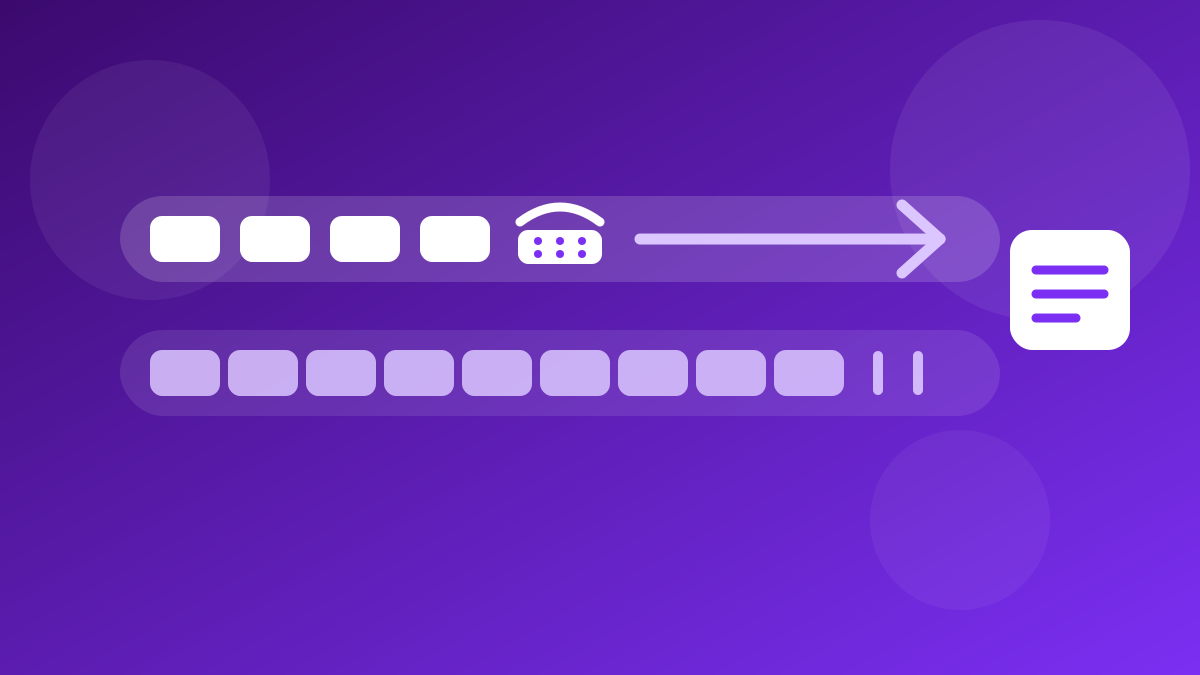
Think of a SIP trunk as a virtual phone line. Your existing PBX system connects to the public telephone network through the internet rather than physical phone lines. Each SIP trunk can handle multiple concurrent calls — typically far more than a single copper line.
The SIP protocol handles the setup, management, and teardown of each call session. Your voice is converted into digital data packets, transmitted over your internet connection, and reassembled on the other end.
Key Benefits of SIP Trunking
Cost Savings: SIP trunks are typically 40-60% cheaper than traditional PSTN lines. There are no physical lines to maintain, and long-distance calls cost a fraction of what copper lines charge.
Scalability: Adding new lines takes minutes, not weeks. Need 4 extra channels for a busy season? Simply upgrade your plan. No technician visits required.
Reliability: Built-in failover routing means if one path goes down, calls automatically reroute through backup channels.
SIP Trunking in Jamaica
For Jamaican businesses, SIP trunking is particularly attractive. WOCOM's Flexi-SIP Trunk service starts at just J$10,000/month for 4 channels and scales up to 128 channels for enterprise deployments. All plans include unlimited inbound calling, a local 876 DID number, number porting, E911 support, and 24/7 technical support.
Getting Started
Migrating to SIP trunking is straightforward. You keep your existing PBX hardware, keep your existing phone numbers, and simply replace the physical lines with a SIP connection. Most businesses complete the transition in under a week.
Continue exploring
Ready to upgrade your communications?
Talk to our team about the right solution for your business.
Book a Demo Contact SalesEverett Kildare is WOCOM's voice and infrastructure specialist, with more than 25 years of experience designing and running carrier-grade voice, SIP and virtualization infrastructure. Holding a BSc in Information Technology, he has built, secured and migrated phone systems for businesses of every size. Everett writes WOCOM's technical coverage of SIP trunking, cloud PBX, contact centres, business continuity and migration.