SIP Trunks & Virtual Numbers in Jamaica: Choose a Provider That Owns Its Infrastructure
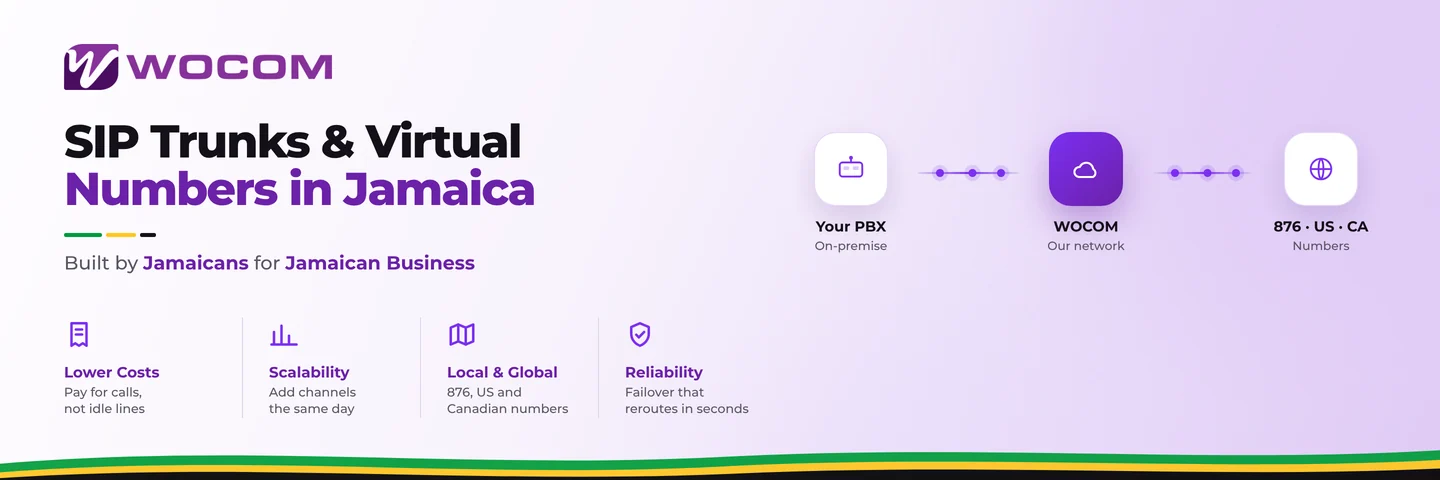
SIP trunks and virtual DID numbers have transformed how Jamaican businesses handle voice. You can keep your existing PBX, scale your channels up and down on demand, add local 876 numbers or international numbers in minutes, and cut your line costs significantly. It is a better way to run business voice — but only if you buy it from the right kind of provider.
The single most important factor in that decision is not price, and it is not the feature list. It is a question of ownership: does the provider own and operate its own infrastructure, or is it reselling someone else's? Everything else — reliability, restoration, support, even how trustworthy the pricing is — flows from the answer.
What a SIP Trunk and a Virtual DID Really Are
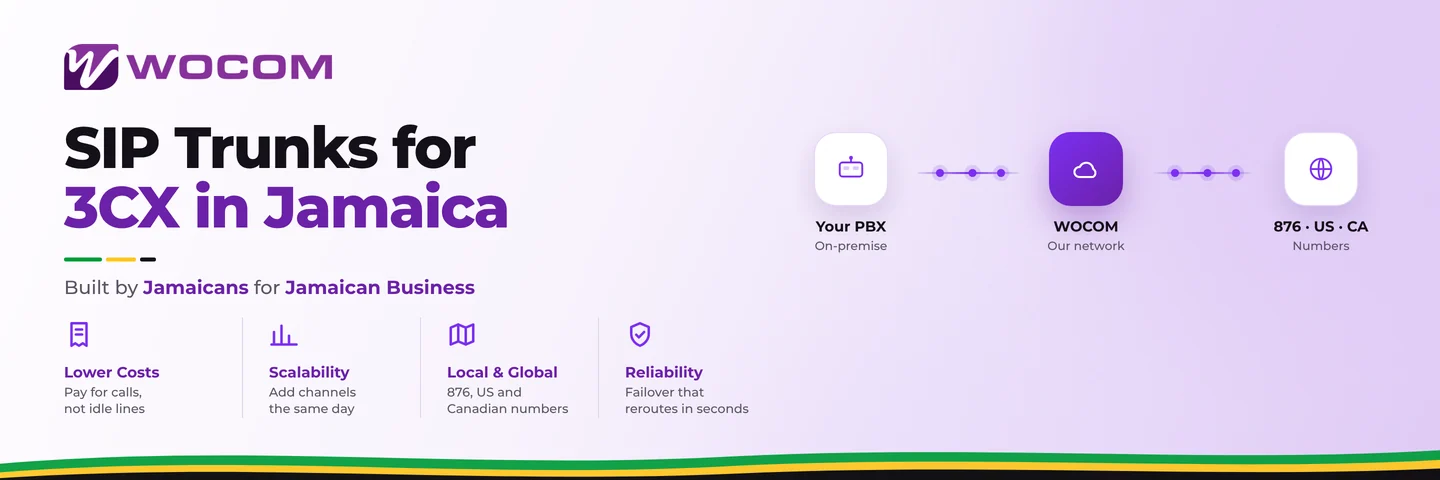
A SIP trunk is a virtual connection that carries voice calls over the internet between your phone system and the wider telephone network. Instead of physical copper lines, you get channels — each one a simultaneous call — that you can add or remove as your needs change.
A virtual DID (Direct Inward Dialing number) is a phone number that lives on a provider's network and routes calls to wherever you choose — your PBX, a mobile, a Cloud PBX, or an AI receptionist. You can have a Kingston 876 number ring in Mandeville, or a number in another country ring in your Jamaican office.
Both are powerful precisely because they are software-defined. But software-defined service still has to run on real, physical infrastructure somewhere — switches, routing systems, and interconnections with other networks. The question is who owns and controls that infrastructure: the company you are paying, or a stranger several steps up a resale chain.
Why Owning the Infrastructure Changes Everything
When a provider owns its own network, it can do things a reseller simply cannot:
- Provision and reconfigure instantly. Need another channel for the Christmas rush, or a number redirected during an emergency? A direct provider makes the change on its own system. A reseller has to request it from upstream and wait.
- Restore service quickly. When there is a fault, the engineers fixing it work for the company you pay. There is no ticket being passed up a chain of third parties while your phones sit silent.
- Commit to a real SLA. A provider can only guarantee uptime and restoration it actually controls. Owning the infrastructure is what makes a meaningful service level possible.
- Deliver consistent call quality. Fewer hops between networks means lower latency and fewer dropped or one-way calls. A direct provider controls the routing end to end.
- Manage your numbers properly. Your DIDs are registered and controlled on the provider's own network, which makes configuration, porting, and continuity far more dependable.
A reseller, by contrast, is a billing layer on top of infrastructure they do not control. They may not even have the systems set up to manage numbers and trunks reliably, which is exactly how businesses end up with delayed restoration and serious interruptions when something goes wrong.
The Questions to Ask Before You Buy
Whether you are buying a single virtual number or a 64-channel SIP trunk, put these questions to any provider in Jamaica before you commit:
- "Do you own and operate your own voice infrastructure, or are you reselling another provider's service?" This is the question everything else depends on.
- "Are you a licensed carrier or service provider in Jamaica?" Legitimate operators answer immediately.
- "When there is a fault, do your own engineers restore the service, or do you escalate to a supplier?"
- "What uptime and restoration times will you commit to in a written SLA?"
- "Can I scale channels up and down, and how quickly do those changes take effect?"
- "Are my numbers registered to your network, and can I port them out if I leave?"
- "Is there a local 876 support line, and what are the hours?"
The pattern in the answers will tell you what you need to know. A provider that runs its own network answers each one directly. A reseller deflects toward "partners" and "carriers" and cannot make firm commitments.
Do Not Let Price Be the Only Filter
It is tempting to sort providers by price and pick the cheapest. But unusually low pricing on trunks and DIDs is often a symptom of a long resale chain, where each layer shaves its margin and support is the first thing to disappear. The real cost of a phone system is not the monthly invoice — it is the lost sales and damaged trust when your phones go down and nobody can tell you when they will return. Reliability is the feature you are actually buying.
Why Jamaican Businesses Choose WOCOM for SIP and DIDs
WOCOM provides SIP trunks and virtual DID numbers on infrastructure we own and operate in Jamaica. Keep your existing PBX or move to our Cloud PBX — either way, you connect to a network we control end to end. That means HD voice, channels you can scale from 4 to 128 on demand, local and international DIDs, a 99.999% uptime SLA, restoration handled by our own engineers, and local 876 support that actually answers. No reseller chain, no middleman, no waiting at the bottom of someone else's queue.
If you are evaluating SIP trunks or virtual numbers for your business, talk to a WOCOM SIP expert. Call us, book a demo, or send a message, and we will design a solution that fits your call volume — and stand behind it with service levels we can actually deliver, because the network is ours.
Continue exploring
Ready to upgrade your communications?
Talk to our team about the right solution for your business.
Book a Demo Contact SalesEverett Kildare is WOCOM's voice and infrastructure specialist, with more than 25 years of experience designing and running carrier-grade voice, SIP and virtualization infrastructure. Holding a BSc in Information Technology, he has built, secured and migrated phone systems for businesses of every size. Everett writes WOCOM's technical coverage of SIP trunking, cloud PBX, contact centres, business continuity and migration.