Call Recording and Compliance for Jamaica's Credit Unions and Financial Firms
In financial services, a phone call is rarely just a conversation. It is a record. When a member of a credit union calls to authorise a withdrawal, when an insurance broker takes instructions to adjust a policy, or when a micro-finance officer confirms the terms of a loan, that exchange can become the difference between a smooth resolution and a costly dispute. For Jamaica's cooperative banks, credit unions, micro-lenders, brokers and accounting firms, a professional phone system with reliable call recording is no longer a luxury. It is part of running a responsible institution that handles other people's money.
This article looks at why recording matters in financial services, how to store and manage those recordings sensibly, and why the reliability of the underlying network is just as important as the recording feature itself.
Why call recording matters in financial services
The most immediate reason is dispute resolution. Members and customers remember conversations differently from staff, and memories fade. A clear recording lets you go back to exactly what was said, by whom, and when. That protects the member, the employee, and the institution. Instead of one person's word against another's, you have a factual reference point.
Recording also helps verify instructions and authorisations. Financial transactions often begin with a spoken request, and being able to confirm that a member genuinely asked for a transfer, a beneficiary change, or a payout reduces the risk of error and fraud. For accounting firms and brokers who act on client instructions, having that trail is a basic safeguard.
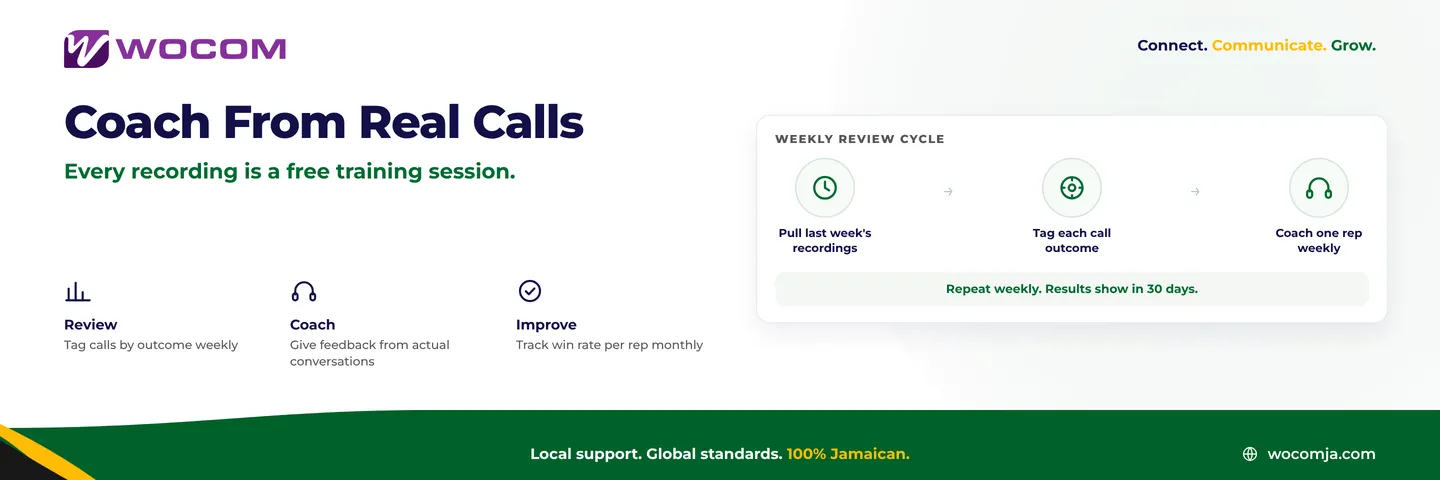
There is a quality and training dimension too. Reviewing real calls helps supervisors coach staff, standardise how sensitive matters are handled, and spot where members are getting confused or frustrated. Over time this raises the standard of service across the whole team rather than leaving each agent to figure things out alone.
Finally, recording supports good record-keeping and member trust. Members who know their institution keeps careful, professional records tend to feel more confident dealing with it. Sound documentation practices are simply part of operating credibly in a sector built on trust.
A practical note on compliance: the points above are general good practice. Consent and notification expectations, along with how long you should keep records, vary by the type of institution and the nature of the call. You should confirm your own consent, disclosure and retention obligations with your compliance advisers and regulators rather than assuming a single rule fits every situation. The goal here is to give you the operational tools to meet whatever obligations apply to you.
Secure storage, access controls and sensible retention
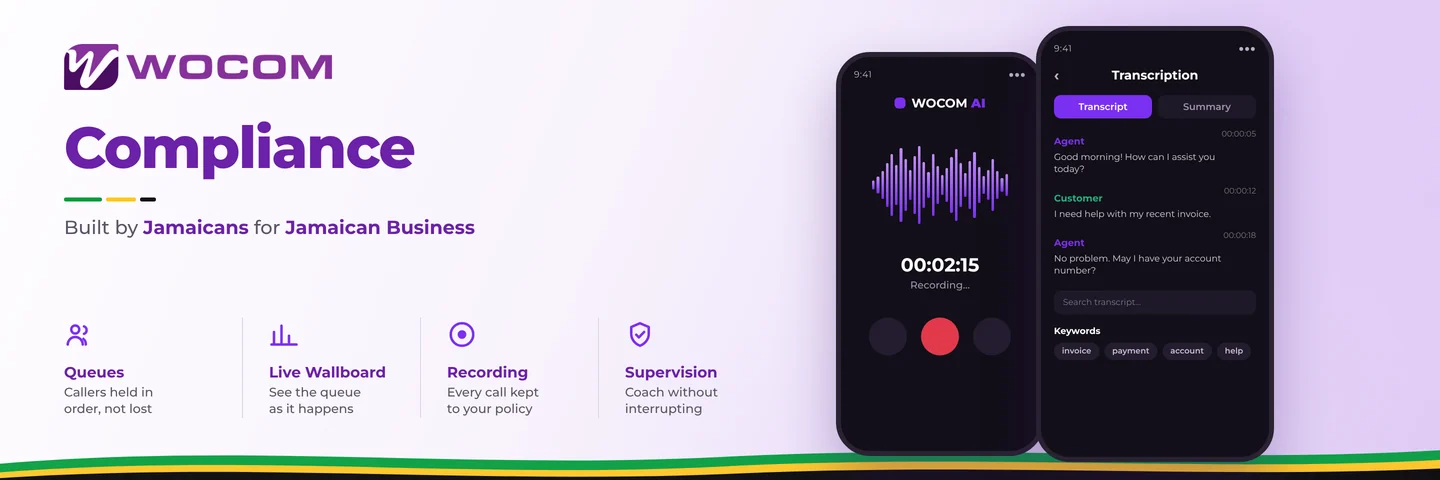
Recording a call is only half the job. What happens to that recording afterwards matters just as much. Financial conversations contain sensitive personal and account information, so storage needs to be secure and access needs to be controlled. Not everyone in the organisation should be able to pull up any recording at will.
Look for a system that lets you restrict playback to authorised staff, keeps a clear trail of who accessed what, and protects recordings from casual tampering or deletion. The aim is that recordings are available to the people who genuinely need them, for legitimate reasons, and no one else.
Retention deserves a deliberate decision rather than a default. Keeping recordings forever creates unnecessary risk and storage cost; deleting them too soon can leave you exposed when a dispute surfaces months later. Set a retention period that reflects your own regulatory guidance and business needs, apply it consistently, and document why you chose it. A good provider gives you the controls to enforce that policy rather than forcing a one-size-fits-all approach on you.
Pairing recording with IVR, queuing and ring groups
Recording works best when it sits inside a phone system that routes members to the right place quickly. A member calling about a loan should not have to explain their issue three times before reaching someone who can help. This is where an IVR, or auto-attendant, earns its keep: it greets callers, offers clear options, and directs them to the correct department from the first second.
Behind that, call queuing keeps members in an orderly line during busy periods instead of hitting an engaged tone, and ring groups make sure a call rings the whole loans desk or claims team rather than a single phone that might be unattended. Together these features mean fewer abandoned calls, shorter waits, and recordings that are tied to the right department and context. For an institution where every missed call could be a member needing urgent help, that routing is not a frill.
Why reliability and a real uptime SLA matter
For a business that handles money, a phone outage is not a minor inconvenience. If members cannot reach you, they cannot transact, get answers, or report problems, and trust erodes quickly. This is why the reliability of the network underneath your phone system matters as much as any individual feature.
When you handle people's money, your phone line is part of your service promise. An hour of downtime is an hour your members cannot reach you, and that is measured in trust, not just minutes.
A meaningful uptime commitment, backed by a service level agreement, tells you the provider stands behind that reliability. There is a real difference between a provider who simply resells someone else's network and one who owns and operates the network itself. When something goes wrong, an owner can diagnose and restore service with its own engineers, on its own infrastructure, rather than logging a ticket with an upstream supplier and waiting. For a financial institution, that difference is the difference between a quick recovery and a long, helpless wait.
Keeping member-facing numbers stable
Your published phone numbers are part of your identity. Members have them saved, they appear on cards, statements and branches, and they build up years of recognition. Changing them is disruptive and can quietly cost you contact. The good news is that in Jamaica, number portability is a regulated right, so you are generally able to keep your existing numbers when you move to a better provider. That means you can upgrade to a more capable, more reliable phone system without asking every member to learn a new number. Stability of your numbers, combined with stability of your network, keeps you reachable through any transition.
Bringing it together
For Jamaica's credit unions, cooperative banks, micro-finance lenders, insurance brokers and accounting firms, the pieces fit together naturally: call recording to document and verify, secure storage and sensible retention to manage those records responsibly, IVR and queuing and ring groups to get members to the right people, and a reliable owned network with a real uptime commitment to keep the whole thing dependable. None of these features stand alone. They add up to a phone system that supports the way a serious financial institution actually works.
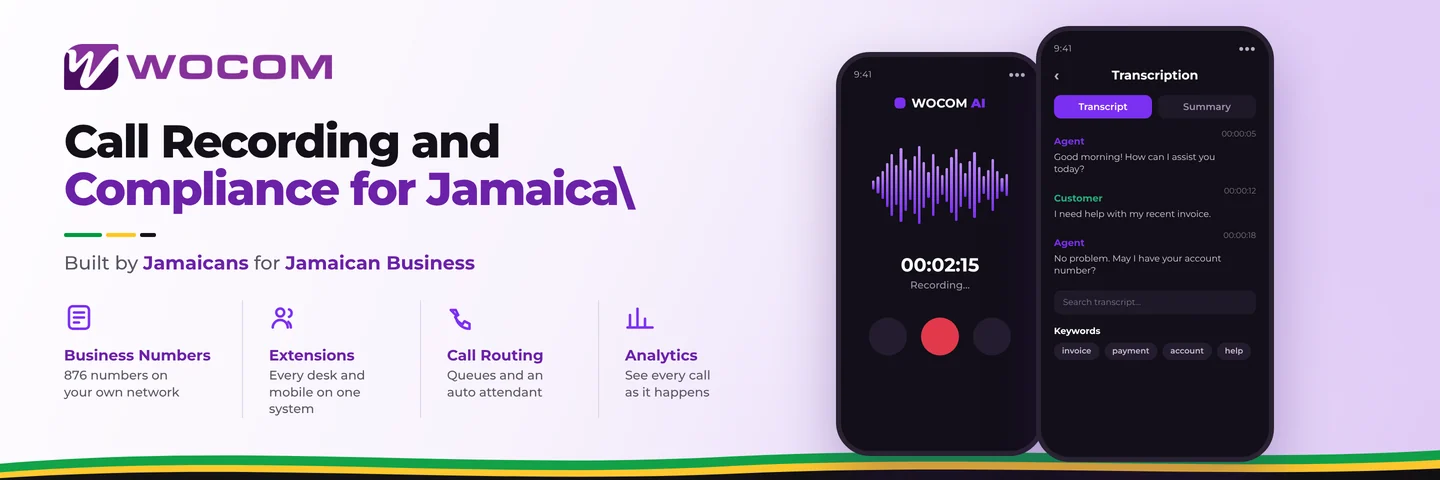
WOCOM is a licensed Jamaican business phone provider that owns and operates its own network, with call recording and playback, 876 business numbers, Cloud PBX, IVR and auto-attendant, call queuing, call analytics and a 99.999% uptime SLA, all backed by local 876 support and restoration handled by WOCOM's own engineers. If your institution wants a secure, dependable phone system built for the realities of financial services, book a demo or call us at 876-906-7240 to talk it through with our team.
Continue exploring
Ready to upgrade your communications?
Talk to our team about the right solution for your business.
Book a Demo Contact SalesMichelle Goss is a data and AI analyst at WOCOM, where she studies how Jamaican businesses use voice, messaging and AI to win and keep customers. With a BSc in Data Science & Analytics, she turns call data, customer trends and AI receptionist performance into practical guidance owners can act on. Michelle writes WOCOM's coverage of AI call handling, call analytics, customer growth and industry trends.